
 Thoughts + Podcasts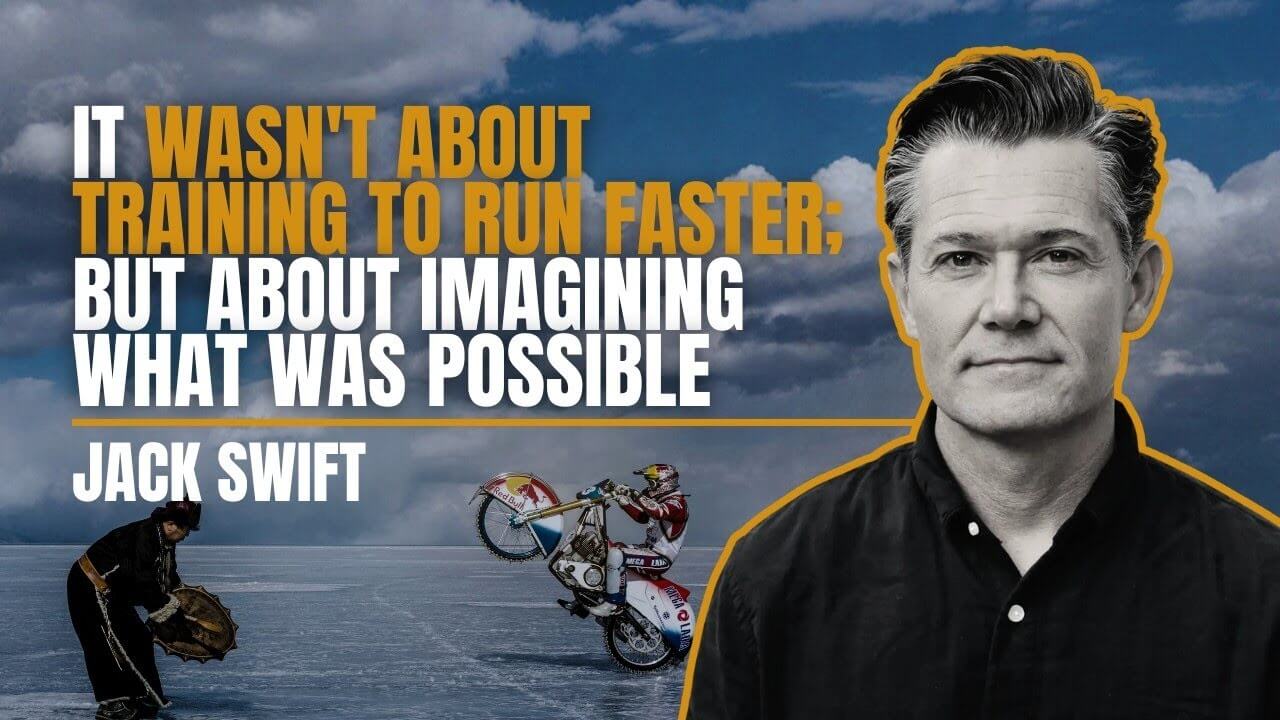
Jack · 2/14/2026
Shamans vs Scientists
Shamanism + Science
In the Human + Human + Machine Era, leadership is not primarily a strategy problem.
It is a nervous system problem.
In Level 7 Leadership: The Blueprint for the Human+Machine Era , Chapter 2 explains what happens when the operating system fails.
Under reputational risk.
Under time compression.
Under sustained ambiguity.
The amygdala activates before the prefrontal cortex.
Stephen Porges (Polyvagal Theory) demonstrates that when the nervous system detects threat, it shifts from social engagement into protection — fight, flight, or freeze.
When that shift occurs:
• Cognitive flexibility decreases
• Working memory narrows
• Long-term planning contracts
• Emotional contagion increases
Amy Edmondson (Harvard Business School) has shown that psychological safety predicts learning speed and innovation capacity. But psychological safety is not a cultural preference — it is a physiological condition.
Paul Zak (Claremont Graduate University) demonstrated that high-trust environments measurably improve performance and reduce stress markers through oxytocin-mediated bonding.
Mihaly Csikszentmihalyi (University of Chicago) identified that peak performance — flow — occurs when executive control networks and imaginative networks synchronize.
This is where Shamanism + Science converge.
Shamanism = State Mastery
For thousands of years, shamanic traditions trained practitioners to deliberately regulate their internal state.
Breath control.
Rhythmic entrainment.
Environmental stress exposure.
Sensory modulation.
The goal was controlled transition out of fear-based reactivity and into expanded perception.
Science = Measurement
Modern neuroscience now measures:
• Vagal tone as a marker of regulation
• Heart-rate variability as a predictor of resilience
• Neural integration as a correlate of decision quality
• Social synchrony as a driver of collective intelligence
Level 7 = Operationalization
In the book, I call this:
Coherence as Competence.
Inner coherence → regulated nervous system.
Relational coherence → distributed trust (Edmondson).
Systemic coherence → adaptive performance under complexity (complex systems theory).
Complex adaptive systems require coherence to remain resilient under acceleration.
Machines amplify whatever signal they receive.
If a leader operates from threat, the machine scales contraction.
If a leader operates from regulation, the machine scales clarity.
This is not spirituality in business.
It is applied neurobiology in exponential environments.
The executive question is simple:
As AI compresses time, can your nervous system remain coherent?
Machines scale cognition.
Leaders must scale regulation.
That is the next operating system.
